A boat interior should feel comfortable without becoming difficult to maintain. Seating, cushions, and interior panels face sunlight, moisture, salt, and constant movement, so ordinary furniture materials often struggle in this environment. Choosing the right boat upholstery material can help owners create a more comfortable and durable interior while also improving its appearance. For professional marine upholstery services, Boat Upholstery Broward specializes in custom upholstery for boats and yachts.
Start With the Boat’s Real Environment
Every boat operates under different conditions.
A vessel used offshore may face constant saltwater exposure, while a freshwater boat may experience different forms of moisture and wear. Boats in warm climates can also receive intense sunlight throughout the year.
These conditions should influence every upholstery decision.
Before choosing a boat upholstery material, owners should consider:
- Where the boat operates
- How frequently it is used
- How much direct sunlight reaches the seating
- Whether it operates in freshwater or saltwater
- How the boat is stored
- How often the interior requires cleaning
Understanding these factors makes material selection much more practical.
Marine Vinyl Combines Style and Performance
Marine vinyl remains one of the most common options for boat seating.
It provides a broad selection of colors, textures, and finishes while offering qualities needed for marine environments. High-quality marine vinyl can resist moisture, sunlight, and frequent cleaning better than many conventional upholstery materials.
However, not every vinyl product performs the same way.
Owners should check the specifications before choosing a boat upholstery material, particularly when seating will remain outdoors for extended periods.
Cushioning Deserves Equal Attention
A comfortable seat depends on more than its exterior covering.
Foam gradually loses resilience as passengers use the seating repeatedly. Over time, cushions can become compressed, uneven, or uncomfortable.
Moisture can create additional problems when it reaches the foam.
Replacing worn cushioning during an upholstery project can restore the original shape of the seats and improve support. It can also help new upholstery maintain a cleaner appearance.
UV Resistance Protects More Than Color
Sunlight can have a significant impact on marine interiors.
Repeated UV exposure can fade colors and contribute to surface deterioration. Open cockpit seating and helm seats often experience the greatest exposure.
A quality boat upholstery material should provide suitable UV resistance for the environment where it will be used.
Owners can also reduce exposure by covering seating when the boat remains unused.
Moisture Requires a Practical Strategy
Water is unavoidable around boats.
Rain, spray, wet clothing, and accidental spills can all introduce moisture to seating. Materials designed for marine applications can provide better protection, but maintenance still matters.
Owners should avoid leaving wet cushions in enclosed areas for extended periods.
Allowing seating to dry completely can reduce unpleasant odors and help limit moisture-related problems.
Texture Can Change the Character of an Interior
Material selection also creates visual opportunities.
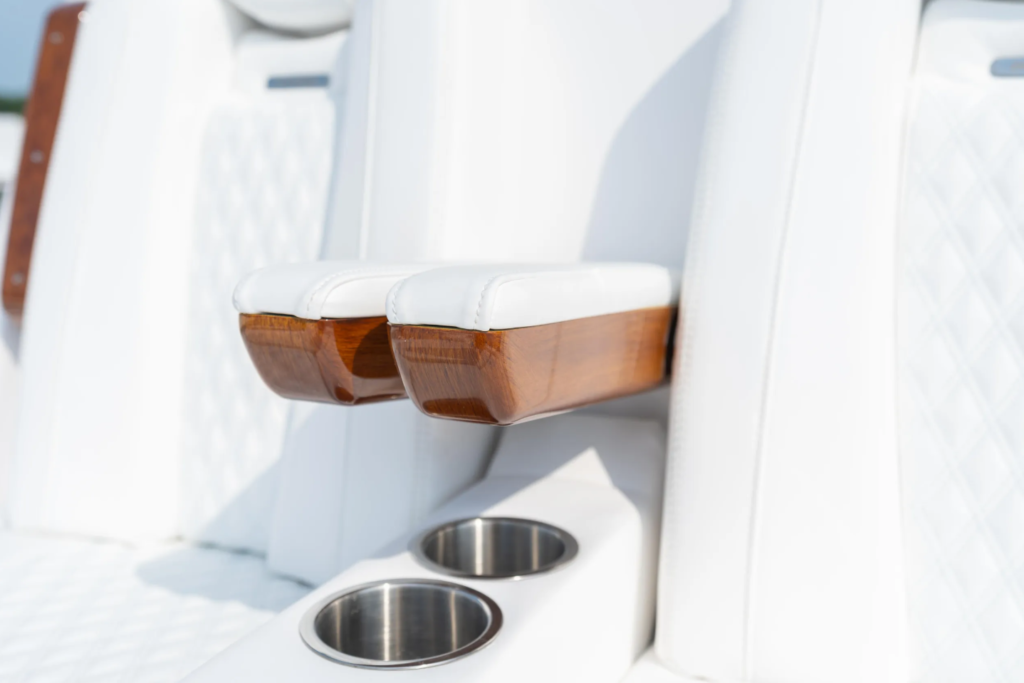
Smooth finishes can produce a clean, modern appearance. Textured surfaces can add depth and make larger seating areas more visually interesting.
Combining different textures can create subtle contrast without overwhelming the interior.
For example, a textured side panel paired with a smooth central section can give a boat upholstery material installation a more sophisticated appearance.
Color Should Match the Boat
A new interior does not need to follow a traditional nautical color scheme.
Owners can choose neutral shades for a timeless appearance or introduce stronger colors through accent panels and piping.
Common combinations include:
- White and navy
- Gray and black
- Cream and sand
- Blue and white
- Neutral colors with contrasting details
The best palette should complement the boat’s existing design and remain appealing over time.
High-Traffic Seating Needs Extra Protection
Some seats experience significantly more wear than others.
Helm seating receives constant pressure from the operator. Cockpit seating may encounter sunscreen, food, drinks, wet clothing, and outdoor equipment.
These areas benefit from durable surfaces and strong construction.
Selecting a boat upholstery material according to the location of the seat can help prevent unnecessary repairs and extend the life of the interior.
Easy Maintenance Makes a Difference
Even the most attractive upholstery can become frustrating if it requires complicated cleaning.
Marine seating should allow owners to remove everyday contaminants without damaging the surface. Salt, sunscreen, dust, and spills should receive attention before they accumulate.
A simple routine can include:
- Wiping seats after trips
- Removing salt residue
- Cleaning spills promptly
- Drying wet cushions
- Inspecting seams
- Using suitable marine cleaning products
These habits help preserve both appearance and material performance.
Custom Details Add Personality
Material selection provides the foundation, but finishing details create individuality.
Owners can use decorative stitching, contrast piping, custom embroidery, and two-tone panels to create a distinctive interior.
These details can make a boat feel more personalized without requiring major structural changes.
A carefully selected boat upholstery material can serve as the base for a design that feels both modern and practical.
Quality Materials Can Support Long-Term Value
A neglected interior can influence how people perceive an entire vessel.
Faded, cracked, or damaged seating may make a boat appear older and less cared for. In contrast, clean and well-maintained upholstery can improve the overall presentation.
For owners who may eventually sell their boat, maintaining the interior can therefore support its visual appeal and perceived condition.
Final Thoughts
Marine upholstery must combine comfort, durability, and design. Choosing materials based only on appearance can create problems later, especially when seating faces strong sunlight, moisture, salt, and heavy use.
The right boat upholstery material can provide a practical foundation for a more comfortable and attractive interior. When owners combine suitable materials with quality cushioning, thoughtful design, and regular maintenance, their seating can remain ready for many seasons of boating.